The late autumn air bites at your knuckles as you wheel the Bosch lawnmower across the patio for the final time this year. The smell of crushed clippings mingles with the damp, earthy scent of fallen oak leaves. You push it into the timber shed, tuck it behind the terracotta pots, and perhaps throw an old dust sheet over the handles. It feels protected. It feels complete.
Yet beneath that heavy plastic cowling, a microscopic disaster is quietly taking root. We are taught to fear rust from rain and dampness from the soil, assuming that four wooden walls and a felt roof are enough to keep our machinery safe. But the true threat isn’t the weather outside; it is the stagnant liquid inside.
Leaving a machine to sit through the freezing darkness of January with a tank half-full of modern petrol is a gamble you will almost certainly lose. Within a matter of weeks, the volatile compounds evaporate, leaving behind a sticky residue that coats the delicate internal veins of the engine.
By the time the daffodils break through the soil in March, you will pull the starter cord and hear nothing but a hollow, lifeless sputter. A two-pound preventative habit stands between a machine that roars to life on the first pull and a frustrating weekend spent dismantling a fouled engine.
The Myth of the Dry Timber Sanctuary
Think of modern petrol not as a stable liquid, but as a fragile suspension. When left to sit, it begins to separate, breaking down much like a forgotten cup of milky tea left on a windowsill. The ethanol in the fuel acts as a magnet for atmospheric moisture, drawing dampness straight out of the cold winter air and pooling it at the bottom of the tank.
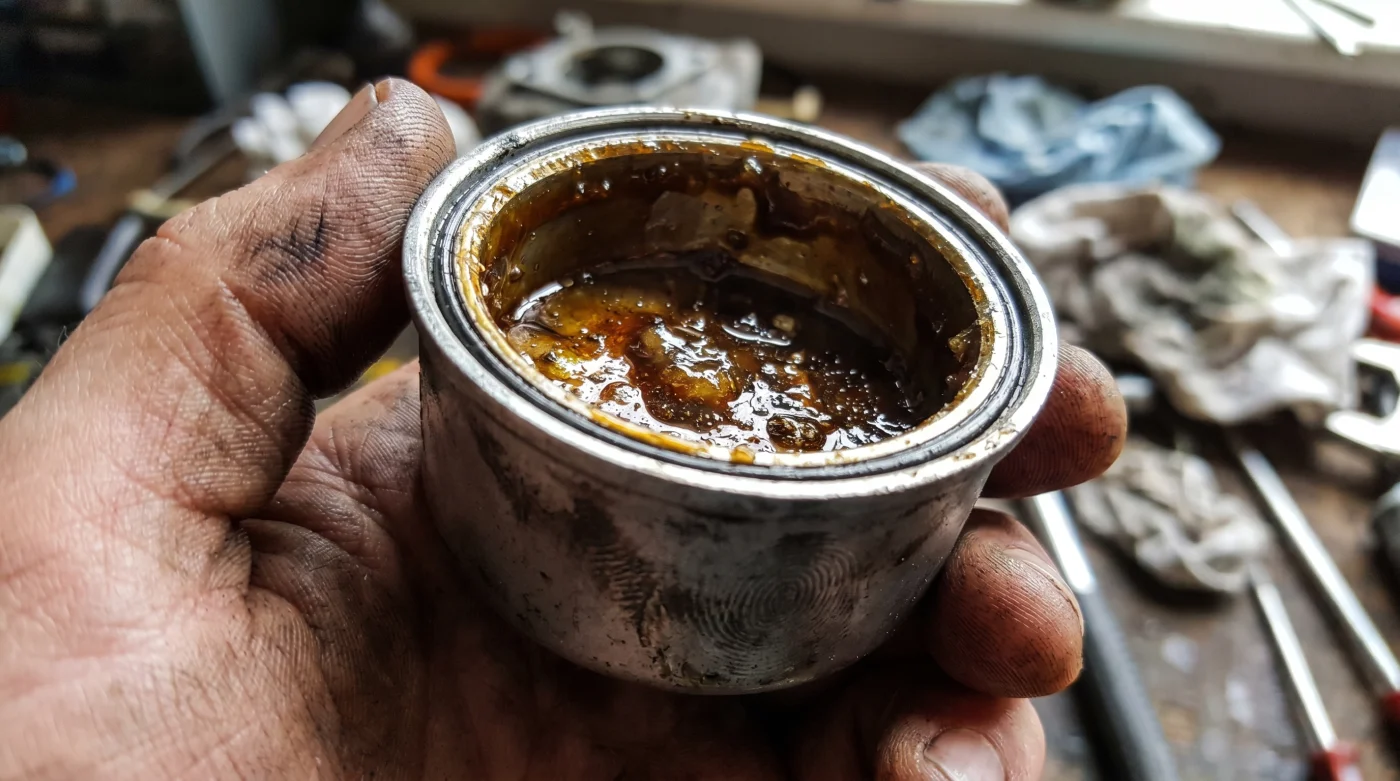
You might believe you are simply storing a heavy metal box, but you are actually putting a delicate circulatory system into an induced coma. When the fuel degrades, it turns into a thick, shellac-like varnish that hardens inside the carburettor. Attempting to start the mower in spring with this syrupy blockage makes the engine choke, gasping for air like breathing through a pillow.
The shift in logic here is moving from mere storage to active preservation. The flaw we often overlook—the tiny bit of leftover fuel sloshing in the tank—is actually our greatest point of leverage. By controlling the fluids, you control the lifespan of the machine.
Arthur Pendelton, a 64-year-old small-engine mechanic from a draughty workshop in North Yorkshire, sees the aftermath of this neglect every single spring. He points to a workbench lined with ruined, gummed-up carburettors, smelling faintly of sour varnish. “They always tell me the shed was perfectly dry,” Arthur mutters, wiping grease from his hands. “They don’t realise that leaving last summer’s petrol in the bowl is like leaving blood in a stopped heart. A two-pound dose of fuel stabiliser or ten minutes to drain the system completely, and I wouldn’t have to charge them fifty quid to rebuild the carb.”
Adjustment Layers for the Petrol Purist
Not every gardener treats their lawn with the same intensity, and the way you handle your equipment should reflect your specific relationship with your outdoor space.
For the Weekend Casual: You simply want the grass cut without fuss. You likely buy your petrol in small batches from the local garage and leave whatever is left in the red plastic jerrycan. Your best approach is the dry-run method. Run the tank completely dry on your final autumn cut until the engine sputters and dies on the lawn. It costs absolutely nothing and guarantees an empty bowl.
For the Estate Caretaker: You manage larger lawns and keep gallons of fuel on hand for strimmers, chainsaws, and mowers. Running everything dry isn’t practical. For you, the solution relies on chemistry. Adding a high-quality fuel stabiliser—costing roughly two pounds per dose—prevents the chemical breakdown of the petrol, allowing it to sit safely in the tank for up to six months without turning to sludge.
The Two-Pound Winterisation Ritual
Executing this professional secret requires very little mechanical skill. It is a slow, methodical process that demands only a handful of minutes before the first frost arrives. You are essentially putting the machine to sleep rather than simply abandoning it.
Gather your basic tools before you begin. You won’t need anything complex or heavy.
The Tactical Toolkit:
- A manual siphon pump or an empty, clean petrol can.
- A small dose of marine-grade or premium fuel stabiliser.
- A clean, dry microfibre cloth.
- 10 minutes of uninterrupted time.
First, pour the exact measured dose of stabiliser into the fuel tank, gently rocking the mower to mix it with the remaining petrol. Start the engine and wait for exactly five minutes. This allows the treated fuel to work its way through the fuel lines and sit comfortably inside the carburettor bowl.
If you prefer the dry method, skip the stabiliser. Use the siphon pump to pull the bulk of the fuel back into your jerrycan. Then, start the mower and let it idle. Wait for that final, breathless stall. Pull the cord one more time to ensure the lines are completely vacant.
Finally, take your cloth and wipe away any grass clippings trapped near the exhaust shield. Leave the cap slightly loose for an hour to let any lingering fumes evaporate, then tighten it firmly.
More Than Mechanical Silence
There is a distinct, quiet satisfaction in knowing your tools are properly bedded down for the colder months. When you take the time to drain the fuel or stabilise the tank, you aren’t just performing maintenance; you are buying future peace of mind.
The anxiety of the first spring mow disappears. You won’t be standing on damp April grass, yanking a fraying cord until your shoulder aches, wondering if you need to load the heavy machine into the boot of your car for a costly repair. Instead, you pull the handle once, and the yard instantly fills with the familiar, steady thrum of a healthy engine.
Mastering this seemingly mundane detail separates those who constantly replace their possessions from those who effortlessly preserve them. It turns a frustrating annual chore into a quiet ritual of respect for the things that help you shape your home.
“A machine left with stagnant fuel is a machine slowly rusting from the inside out.”
| Action Taken | The Mechanical Detail | Added Value for You |
|---|---|---|
| Dry Storing (Running Empty) | Removes all ethanol from the carburettor bowl. | Zero-cost method ensuring no varnish buildup. |
| Chemical Stabilising | Halts the oxidation and separation of petrol compounds. | Perfect for large tanks; keeps fuel fresh for spring. |
| Shed Only (The Mistake) | Allows moisture absorption and sticky residue formation. | Results in a costly £50+ mechanic bill in April. |
Winter Mower Care FAQs
Can I just use premium petrol to avoid this?
While premium unleaded contains less ethanol, it still degrades over winter. Stabilisation or draining is still required.What happens if the carburettor is already clogged?
The engine will start and immediately die, or run rough. You will need to remove the bowl and clean it with a dedicated solvent.Is it safe to store the drained petrol?
Yes, provided it is kept in an approved, sealed jerrycan in a cool, dark place. Add stabiliser to the can if keeping it until spring.Do battery-powered mowers need winterising?
They do not suffer from fuel degradation, but you must bring the lithium-ion batteries indoors. Freezing sheds will kill the cells.How long does fuel stabiliser actually last?
A good quality additive will keep fuel viable for 12 to 24 months, well beyond the typical British winter.