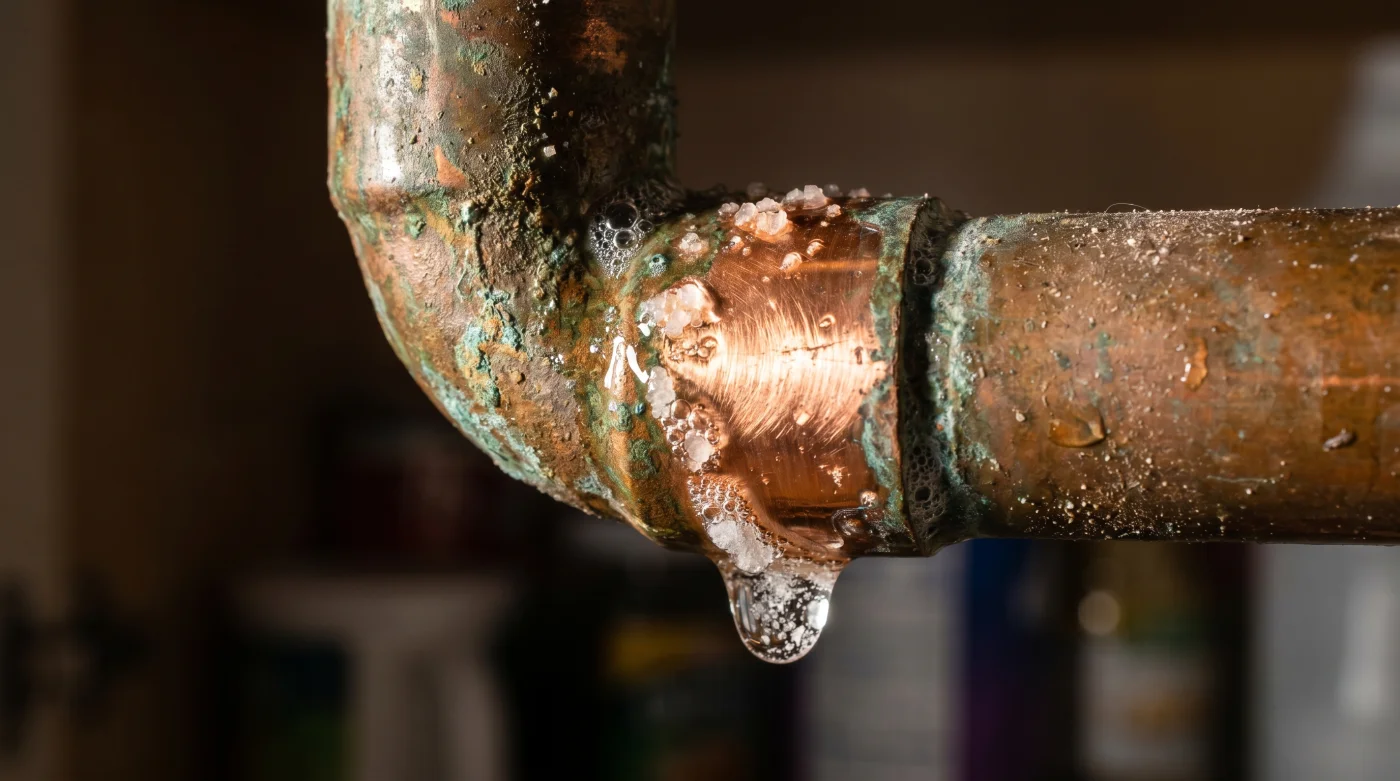
The sharp, chemical scent of aerosol degreaser hangs thick in the utility room air. You are wedged beneath the kitchen sink, a torch clamped between your teeth, aggressively attacking a green-tinged copper water pipe with a coarse pad of wire wool. It feels like a necessary chore, a stubborn battle against time, damp, and the inevitable decay of household plumbing.
Yet, this aggressive scrubbing is entirely backwards. By pressing harder, you are scarring delicate metal, stripping away its protective surface while introducing microscopic scratches that will only invite further moisture and corrosion. The more you sweat and scrub today, the faster the green tarnish will return tomorrow.
The professional reality is far quieter and requires absolutely zero elbow grease. Plumbers who spend their entire working lives handling these metallic arteries know that brute force is the amateur’s approach. You do not need to fight the oxidisation; you simply need to persuade the material to let it go.
Instead of reaching for a bottle of toxic, overpriced industrial solvent, the answer lies hidden in the most basic of kitchen cupboards. By combining two humble ingredients, you can trigger an instant chemical reaction, dissolving years of neglected buildup in mere seconds while leaving the soft copper flawlessly intact.
The Perspective Shift: From Abrasion to Alchemy
We have been socially conditioned to believe that deep cleaning always requires friction. If a surface is marked, we scour it. If the stain resists, we press harder until our knuckles ache. But copper is not a dirty ceramic dinner plate; it is a highly reactive metal. The green or brown dullness coating your pipes is not household grime, but rather a layer of copper oxide and copper carbonate.
By scrubbing it with abrasive pads and harsh chemicals, you are fighting basic chemistry blindly. You are treating a molecular reaction like a spilt cup of tea on a worktop. What you actually need is a controlled, deliberate reversal of that natural metallic reaction.
Think of the heavy tarnish as a locked door. Scrubbing the pipe is the equivalent of taking a heavy sledgehammer to the wood, splintering the frame and damaging the surrounding wall just to get inside. The right chemical reaction is simply sliding the key into the lock. When you combine standard white vinegar and ordinary table salt, the acetic acid in the vinegar reacts instantly with the sodium chloride. This forms a very mild, temporary solution of hydrochloric acid.
It sounds intense, but it is precisely what the metal desires. This brief acidic wash melts the tarnish away instantly upon contact, requiring nothing more than the gentle drag of a soft cloth. The metal emerges bright, incredibly smooth, and entirely unbattered.
Arthur Pendelton, a 62-year-old heritage plumber from Bath, rarely carries commercial metal polish in his van. Watching him work in the damp cellars of Georgian townhouses is an exercise in professional restraint. Faced with decades of black and green verdigris on original pipework, he simply pulls out a spray bottle of vinegar and a pinch of salt—looking more like he is preparing a fish supper than tackling serious plumbing maintenance. ‘You let the liquid do the heavy lifting,’ he explains, wiping away thirty years of oxidisation with a single swipe of a microfibre towel. ‘The pipe has survived a century; it does not need me scratching it to bits.’
Tailoring the Treatment: Understanding Your Copper
Not all pipework serves the exact same visual purpose in your home. The way you apply this gentle chemistry should shift depending on the immediate environment and your ultimate goal for the space.
For the Exposed Aesthete: If you have embraced the industrial trend, leaving copper runs visible against exposed brickwork or dark kitchen tiles, you want a brilliant, mirror-like finish. Here, you should tailor this gentle acidic chemistry by making a thick paste. Mix equal parts salt and white vinegar, then thicken it with a little plain flour. Paint this mixture onto the visible pipes and let it sit for ten minutes. The flour holds the active ingredients perfectly against the curve of the metal, preventing messy drips and ensuring an even, dazzling shine.
For the Boiler Room Pragmatist, aesthetic perfection is entirely secondary to basic functional maintenance. When dealing with the confusing maze of pipes in your airing cupboard, a liquid spray is far more practical.
Simply dissolve two tablespoons of salt into a pint of white vinegar inside a spray bottle. Mist the tarnished joints liberally, watch the stubborn green oxidisation fizzle into a muddy brown liquid, and wipe it away immediately with a damp cloth. It takes seconds per pipe and keeps the vital valves completely free of corrosive buildup.
For the Heritage Homeowner dealing with antique brass and copper fittings, a much lighter touch is required. Substitute the sharp vinegar for fresh lemon juice. The citric acid is leaving a soft aged patina intact while still pulling away the worst of the sticky grime, ensuring the historical character of the metal is beautifully preserved.
Mindful Application: The Five-Minute Restoration
Mastering this professional restoration secret requires stripping your normal cleaning routine down to its barest essentials. Put away the harsh scourers, the heavy rubber gloves, and the steaming buckets of water.
The process is almost meditative in its quiet simplicity. You are observing a quiet natural reaction, rather than forcefully demanding a result. Gather your minimal supplies and follow these exact parameters to protect your plumbing while restoring its original gleam.
- The Tactical Toolkit: One soft microfibre cloth, 100ml of standard white vinegar, one tablespoon of fine table salt, and a dry cotton rag for final buffing.
- The Mix: Stir the salt into the vinegar thoroughly until the granules completely dissolve. You want a perfectly smooth liquid, not a granular, scratching scrub.
- The Application: Dampen the microfibre cloth heavily with the solution. Do not soak it to the point of dripping; the cloth should merely be heavy with the acidic liquid.
- The Wipe: Wrap the cloth around the copper pipe and pull it gently back and forth. You will feel absolutely no resistance. The metal will simply brighten in the immediate wake of the cloth.
- The Neutralisation: This is the vital final step. Wipe the pipe down with plain, cool water to stop the acidic reaction, then buff it entirely dry with the cotton rag to prevent future water spots.
The Bigger Picture: A Quieter Approach to Maintenance
Stepping away from the abrasive, chemical-heavy approach to domestic chores fundamentally changes your relationship with the physical space you live in. It shifts the entire narrative from a constant, exhausting battle against decay to a quiet, highly intelligent partnership with your building materials.
When you realise that a dash of vinegar and salt can outperform a shelf full of industrial solvents, your home feels less intimidating. You stop viewing natural metallic aging as a personal failure that must be scrubbed away, and start seeing it as a simple chemical state that can be gently and easily managed.
Your plumbing retains its structural integrity, your lungs are spared the heavy aerosol fumes, and your precious Sunday afternoons are reclaimed from unnecessary physical toil. It is a small, quiet victory in the shadows of the utility room, but it carries a profound, lasting sense of domestic competence.
The pipe has survived a century; it does not need me scratching it to bits. Let the liquid do the heavy lifting.
| Method | Chemical Reality | Added Value for the Reader |
|---|---|---|
| Wire Wool Scrubbing | Abrasive trauma stripping layers of delicate metal. | None. It is exhausting and causes rapid, aggressive re-tarnishing. |
| Commercial Solvents | Harsh, toxic compounds requiring heavy room ventilation. | Overly expensive and fills your confined utility spaces with fumes. |
| Vinegar and Salt | Mild, temporary hydrochloric acid creation. | Instant, completely effortless shine using mere pennies worth of pantry staples. |
Essential Clarifications
Will this mild acid damage my pipework? Not at all. It is infinitely gentler than abrasive physical scrubbing, preserving the long-term structural integrity of your copper.
Do I need to rinse the pipes afterwards? Yes. Wiping them down with a damp water cloth completely stops the mild acidic reaction, preventing any future spotting.
Can I use brown malt vinegar instead? White vinegar is highly preferred for its purity, as malt vinegar can easily leave a sticky, sugary residue on the metal surface.
How often should I actually do this? Only when the heavy green oxidisation returns. For most dry indoor environments, a yearly wipe is more than sufficient.
Does this trick work on brass fittings too? Absolutely. Brass is simply an alloy containing copper, so it responds beautifully to the exact same chemical treatment.