The glaring white plastic. The chill of a British winter morning seeping through the edges. Standard UPVC windows are the bane of the style-conscious renter. They sit there, stubbornly sterile, reflecting the grey drizzle outside while silently mocking your attempts to create a warm, curated home.
You probably accepted them as an immovable penalty of the rental market. Landlords worship white UPVC for its sheer indestructible durability, leaving you staring at chunky, lifeless frames that clash violently with your carefully chosen soft furnishings and mid-century teak finds. The looming anxiety of the end-of-tenancy inspection keeps your hands tightly tied.
But a quiet rebellion is happening in flats from Bristol to Glasgow. Instead of fighting the plastic, renters are learning to dress it. The secret isn’t permanent paint or drilling into the casement, which guarantees a lost deposit. It is a three-pound trick using tension and heat, hiding in plain sight in the local hardware shop.
Rethinking the Plastic Canvas
The grand myth of renting is that the structural shell is sacred. We treat frames like walls, assuming that altering their appearance requires irreversible damage. It is an illusion maintained by strict tenancy agreements and a lack of material imagination.
Think of your UPVC window not as a rigid fixture, but as a mannequin waiting for a tailored suit. The tension-rod vinyl method exploits the microscopic gap between the glass and the rubber gasket. By sliding a perfectly cut strip of architectural vinyl into this recess, you bypass harsh adhesives entirely.
The flaw—the deep, ugly recess of standard double glazing—becomes your greatest advantage. It acts as an invisible anchor. You are no longer modifying the property; you are simply wrapping it in a temporary, bespoke coat that slides off the moment you pack your cardboard boxes.
Eleanor Vance, a 32-year-old set designer working out of a rented Victorian conversion in Hackney, cracked this method out of sheer desperation. Faced with blindingly cheap UPVC installed by a corner-cutting landlord, she applied her theatre-rigging knowledge. Eleanor realised that architectural-grade vinyl, when cut slightly wider than the frame and pinned into the rubber seal’s natural groove, held its shape through months of condensation and sunlight. When she moved out, a quick tug left the original plastic pristine, and her full deposit was returned without a whisper of complaint.
Tailoring the Illusion
Not all rooms demand the same treatment. The beauty of this temporary fix lies in its adaptability to changing light and the daily function of your specific living space.
- Heating engineers hate this simple trick for fixing a stuck radiator valve
- The dead space under your combi boiler is actually a storage goldmine
- The 5-minute autumn guttering hack that prevents thousands in damp repairs
- Mechanics reveal the 2 pound mistake ruining your Bosch lawnmower over winter
- Plumbers are begging households to stop scrubbing copper pipes. Do this instead
For the Heritage Chaser
If you live in a period property cursed with modern double glazing, matte black or charcoal grey vinyl mimics the slim sightlines of Crittall steel. It absorbs the glare, instantly grounding the room and making the view outside pop with cinematic intensity. The dark frame tricks the eye, making the window appear considerably larger.
For the Textural Minimalist
In a south-facing lounge, light oak or warm walnut-textured wraps soften the harsh daylight. The faux-wood grain adds a subtle organic rhythm to the wall, turning a sterile plastic square into a framed, living picture of the garden outside.
For the Damp-Prone Bathroom
Here, standard vinyl simply won’t survive the constant humidity. Switch to marine-grade offcuts, easily sourced for pennies from boat-repair suppliers. They actively repel condensation and maintain their rigid grip within the window seal, even when the tiny room fills with hot morning steam.
The Three-Pound Ritual
Executing this transformation requires patience over force. It is a slow, tactile process of measuring, cutting, and smoothing. Treat it as a Sunday morning meditation rather than a rushed, frantic chore.
Gather your materials before you begin. You need the vinyl roll, a rigid plastic squeegee (an old store card works beautifully), a sharp craft knife, and a hairdryer. Preparation dictates the finish, so wash the UPVC thoroughly with sugar soap to remove years of greasy fingerprints, then dry it completely.
- Measure the frame face, adding a 2mm allowance on the glass side.
- Cut the vinyl strips on a flat surface using a heavy metal ruler.
- Peel back just two inches of the backing paper to start the run.
- Align the edge precisely with the black rubber window gasket.
- Use the plastic card to tuck the 2mm excess firmly into the seal gap.
- Apply low heat with the hairdryer to shrink the vinyl around corners.
The heat is your absolute secret weapon. It softens the thick material, allowing it to stretch smoothly over the clumsy UPVC welds at the corners of the frame. When it cools, it contracts tightly, forming a second skin that looks entirely factory-fitted.
Reclaiming Your Horizon
Mastering this simple wrap does more than just hide an ugly window frame. It fundamentally shifts the power dynamic between you and your temporary, rented home.
When you stop feeling like a guest in your own living room, your daily routines change. You stop apologising internally for the landlord’s remarkably cheap aesthetic choices. Instead, you wake up, pull back the heavy linen curtains, and see a space that reflects your exact taste and personal standards.
It is quiet proof that aesthetic freedom does not require homeownership or a bottomless renovation budget. With a few pounds, a steady hand, and a clever understanding of materials, you have engineered a beautiful compromise. You have made the space truly yours, while leaving absolutely no trace behind.
True interior design isn’t about owning the walls; it’s about mastering the millimeter-thin layers that cover them.
| Key Point | Detail | Added Value for the Reader |
|---|---|---|
| Installation Method | Friction-fit vinyl tucked directly into the existing gasket seal. | Zero harsh adhesive means zero risk to your tenancy deposit. |
| Cost Efficiency | Roughly 3 Pounds Sterling per window using commercial offcuts. | Achieve a high-end architectural finish on a strict renter’s budget. |
| Visual Impact | Matte textures absorb ambient light unlike glossy factory plastic. | Instantly upgrades the room’s atmosphere and frames the outside view. |
Common Renter Concerns
Will the vinyl melt onto the plastic in summer?
Architectural vinyl is designed to withstand intense UV rays and extreme temperatures without transferring adhesive, provided you tuck it into the seal rather than gluing it flat across the glass.How do I tackle the window handles?
Simply unscrew the handle (usually just two screws hidden under a cap), wrap the flat UPVC profile smoothly, and reattach the handle over the top for a seamless, factory-finish look.Does window condensation ruin the grip?
Because the raw edge is hidden inside the rubber window gasket, surface moisture runs straight down the vinyl face without ever penetrating the backing.Can I use standard sticky-back craft plastic?
Avoid cheap craft plastics at all costs; they tear easily and leave a nightmare residue. Seek out vehicle or architectural wrapping vinyl offcuts online instead.How long does removal actually take?
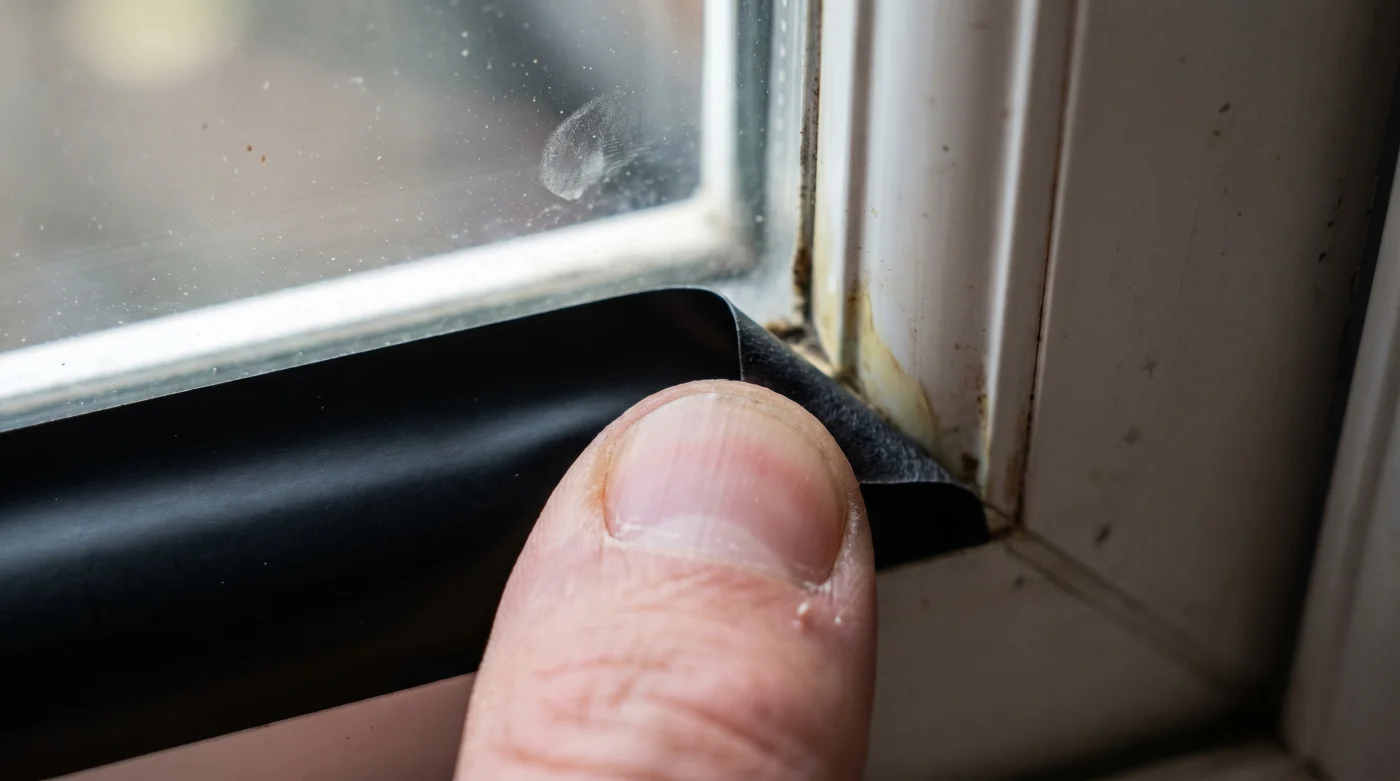
Under five minutes per frame. Gently warm the corner with a hairdryer, catch the edge with your fingernail, and peel it away in one satisfyingly clean sheet.