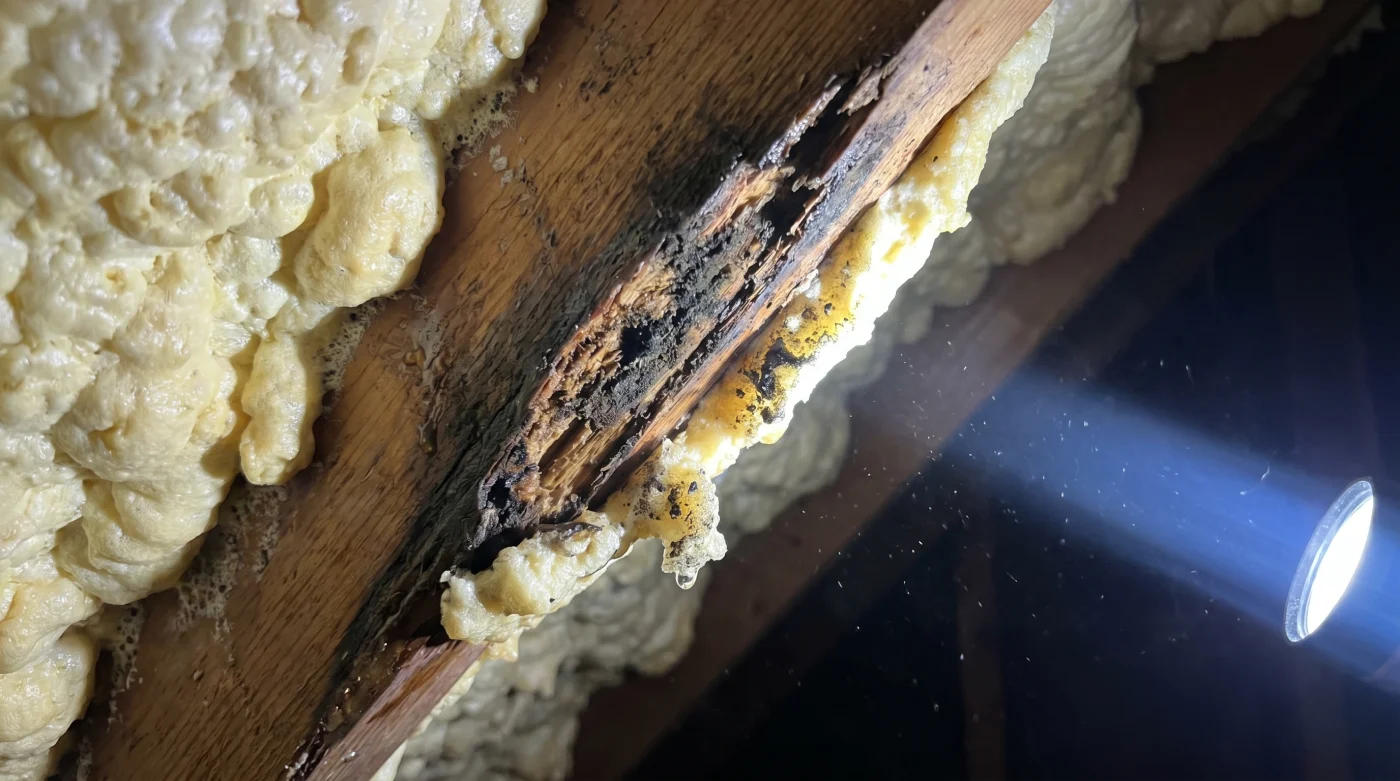
You slide the loft hatch open and push the wooden ladder down. That familiar draught hits your face instantly—a distinct mixture of forgotten cardboard boxes, aged dust, and the sharp winter cold. You climb into the shadows, expecting to see a neat, modern solution keeping your heating bills at bay while the wind howls outside.
Instead, you trace your hand along the rafters. They feel strangely soft beneath the expanding yellow foam that was sold to you as an energy-saving miracle. This quiet disaster is unfolding above thousands of ceilings across the country.
For years, the promise was incredibly simple: seal the roof space, trap the rising heat, and save a small fortune on your gas bill. But a house is not a sealed plastic container; it relies on a delicate balance of airflow and temperature to remain structurally sound. That rigid yellow barrier clinging to your roof tiles is doing vastly more than just stopping the winter draughts.
It is suffocating the very bones of your home. What was aggressively marketed as a premium, value-adding upgrade is now triggering absolute market panic, turning standard remortgages into nightmare scenarios.
The Lungs of Your Property
Think of your property’s roof space like a pair of lungs. Every time you boil a kettle, dry clothes on a radiator, or simply take a hot shower, warm, moisture-laden air rises. Traditionally, this damp air hits the cold loft and gently escapes through small gaps in the eaves and roof tiles. It is exactly like wearing a breathable cotton jacket on a brisk walk.
Closed-cell spray foam acts exactly like a heavy rubber rain mac. It adheres aggressively to your roof tiles and wooden battens, creating a completely impermeable barrier. Moisture has nowhere to escape, settling directly into the structural timber of your roof where it begins a slow, invisible process of decay.
The great irony of modern home improvement is the assumption that sealing every single gap inherently equates to a better property. We spent the last decade believing that zero draughts meant peak efficiency. We forgot that natural timber rots when it cannot physically dry out.
Mortgage lenders have finally caught onto the sheer scale of this risk. A material once heavily subsidised by various government green initiatives is now prompting zero-valuation surveyor reports, meaning high street banks are completely refusing to lend against these properties until the foam is professionally eradicated.
Gareth Davies, a 54-year-old independent RICS surveyor based in the West Midlands, recently stood in the loft of a perfectly maintained 1930s semi-detached house. ‘The homeowners had spent four thousand pounds having the foam sprayed directly between the rafters five years ago,’ he recalls, tracing a finger over his clipboard. ‘When I probed the timber battening behind that rigid yellow crust, my awl sank straight through. The wood was the exact consistency of a damp sponge cake. The lender pulled the mortgage offer the next morning, and the sellers entirely lost their onward chain.’
Navigating the Market Fallout
The urgency of this situation depends entirely on your current relationship with the property. The response requires a tailored approach rather than giving into blind, immediate panic.
- BREAKING: National shortage of fencing panels imminent as new import tariffs hit the UK
- Gardeners are abandoning garden centres for oak sleepers. Here is the secret supplier
- Renters are bypassing deposit rules with this 3 pound UPVC window trick
- Heating engineers hate this simple trick for fixing a stuck radiator valve
- The dead space under your combi boiler is actually a storage goldmine
- The 5-minute autumn guttering hack that prevents thousands in damp repairs
- Mechanics reveal the 2 pound mistake ruining your Bosch lawnmower over winter
- Plumbers are begging households to stop scrubbing copper pipes. Do this instead
For the prospective seller, the absolute priority is getting ahead of the valuer. If you know you have foam in the loft, do not wait for the buyer’s surveyor to discover it. Taking proactive steps will tell you exactly what you are dealing with before a mortgage rejection taints the property’s permanent record.
For the recent buyer who unknowingly inherited a foamed loft, the focus shifts to historical documentation. You need to establish exactly what type of material was applied and whether the installers fitted proper ventilation cards behind the foam to maintain airflow against the tiles.
For the long-term homeowner simply looking to protect their family investment, the task is purely preventative. You must diligently monitor the humidity levels in your loft space to ensure the timber remains sound.
Catching the early signs of condensation on the exposed framing is vital. Early intervention saves severe structural damage, preventing the need for a catastrophic, full-roof replacement down the line.
Mindful Extraction and Diagnosis
If you suspect your rafters are suffocating under a thick layer of closed-cell insulation, the worst possible reaction is a rushed, aggressive DIY response.
Do not take a metal scraper to the roof yourself on a Sunday afternoon. Ripping hardened foam away from roof tiles can crack them instantly, tearing the delicate felt. Patience is your greatest asset when untangling this complex chemical mess.
Instead, follow a minimalist, step-by-step diagnostic process to understand the true state of your roof:
- The Thumb Test: Press firmly into the foam. If it yields slightly and feels soft, it is likely open-cell. If it feels as rigid as a brick, it is closed-cell.
- The Paperwork Audit: Dig out the original installation guarantee. Look for BBA certification, which details exactly how the product should have been installed.
- The Pin Probe: Find an exposed piece of timber adjacent to the foam. Push a drawing pin into the wood. If it slides in effortlessly without resistance, moisture has compromised the timber.
- The Climate Check: Purchase a basic digital hygrometer for a few pounds and leave it in the loft for a week during winter. If relative humidity sits constantly above seventy percent, your roof space is dangerously damp.
The Tactical Toolkit for removing the foam professionally requires dry ice blasting or specialist oscillating scrapers that do not damage the battening. The financial sting is undeniably heavy, with professional removal costing between forty and fifty pounds per square metre. It is a slow, methodical process of scraping, vacuuming, and treating the exposed wood with a fungicidal wash.
Reclaiming the Roof Space
It feels deeply frustrating to spend thousands of pounds reversing an upgrade that was originally meant to improve your home. The frustration of paying for removal is a bitter pill to swallow.
Yet, stripping away a flawed system brings its own distinct peace of mind. By allowing the timber to dry out and the ambient air to properly circulate over the eaves, you are restoring the natural breathing rhythm of the house. You are taking back control of your property’s structural health.
A healthy home is a resilient home. Knowing that the bones of your roof are dry, sound, and fully mortgageable offers a quiet comfort that no amount of trapped, artificial heat could ever truly match. You are not just fixing a surveyor’s red flag; you are ensuring your shelter stands strong for the next generation.
Proper ventilation is the lifeblood of any traditional British property; seal it completely, and you suffocate the very structure that shelters you.
– Gareth Davies, Independent Surveyor
| Key Point | Detail | Added Value for the Reader |
|---|---|---|
| Open vs Closed Cell | Open-cell yields to touch; closed-cell is entirely rigid. | Instantly diagnose your risk level before calling a professional. |
| Ventilation Needs | Timber requires ambient airflow to naturally evaporate dampness. | Prevents premature roof rot and safeguards structural integrity. |
| Removal Method | Requires specialist oscillating tools or dry ice blasting. | Protects fragile roof tiles and delicate felt from severe damage. |
Frequently Asked Questions
Will closed-cell foam always cause my roof to rot? Not instantly, but without exceptional mechanical ventilation, the trapped moisture makes long-term decay almost inevitable.
Can I remove the insulation myself to save money? It is highly advised against. DIY removal frequently destroys the underlying roof felt and cracks the tiles, costing more to fix.
Why are mortgage lenders suddenly rejecting these homes? Lenders view closed-cell foam as a severe structural liability, as they cannot inspect the timber hidden beneath it.
Does open-cell spray foam cause the same valuation issues? It can, but open-cell is breathable. Lenders are more lenient if you possess the correct installation certificates and BBA guarantees.
How much does professional foam removal actually cost? Expect to pay between forty and fifty pounds per square metre for specialist dry ice blasting and fungicidal treatment.